
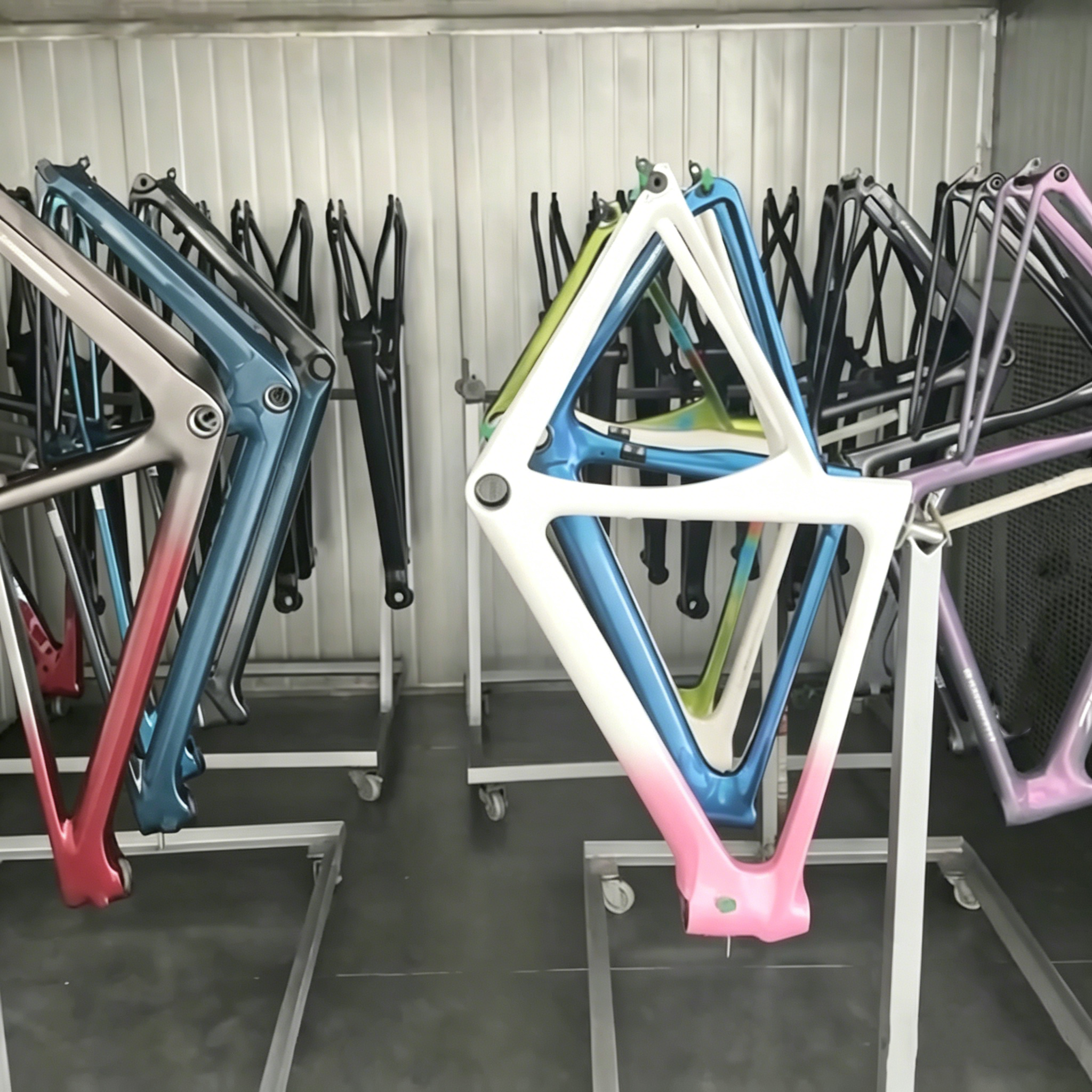
Main Carbon Fiber Frame Materials
Description of Current Main Carbon Fiber Frames Materials:
Carbon fiber, a remarkable material known for its exceptional strength-to-weight ratio and diverse applications, can be categorized based on precursor materials, mechanical properties, and manufacturing processes. The primary types of carbon fibers currently dominating the market include:
1. By Precursor Material (原料分类):
PAN-Based Carbon Fiber (聚丙烯腈基碳纤维):
The most common type, accounting for over 90% of global production. Made from polyacrylonitrile (PAN) precursor fibers. Offers a balance of high strength, modulus, and cost-effectiveness. Widely used in aerospace, automotive, sports equipment, and wind turbine blades.
The most common type, accounting for over 90% of global production. Made from polyacrylonitrile (PAN) precursor fibers. Offers a balance of high strength, modulus, and cost-effectiveness. Widely used in aerospace, automotive, sports equipment, and wind turbine blades.
Pitch-Based Carbon Fiber (沥青基碳纤维):
Derived from petroleum or coal tar pitch. Excels in high thermal conductivity and modulus. Suited for specialized applications like heat-resistant components, thermal management systems, and high-performance composites in aerospace and electronics.
Derived from petroleum or coal tar pitch. Excels in high thermal conductivity and modulus. Suited for specialized applications like heat-resistant components, thermal management systems, and high-performance composites in aerospace and electronics.
Rayon-Based Carbon Fiber (粘胶基碳纤维):
Made from regenerated cellulose (rayon). Known for its high char yield and thermal stability. Primarily used in ablative materials for aerospace applications, such as missile nozzles and thermal protection systems. Less common due to higher costs.
Made from regenerated cellulose (rayon). Known for its high char yield and thermal stability. Primarily used in ablative materials for aerospace applications, such as missile nozzles and thermal protection systems. Less common due to higher costs.
2. By Mechanical Properties (力学性能分类):
High-Strength (HT) Carbon Fiber: Focuses on tensile strength (e.g., T300-T1100 grades). Ideal for structural applications requiring impact resistance, like automotive bodies and sports equipment.
High-Modulus (HM) Carbon Fiber: Offers high stiffness (low elongation). Used in aerospace components, precision instruments, and composites where dimensional stability is critical (e.g., M40-M65 grades).
Ultra-High Modulus (UHM) Carbon Fiber: Exceptionally rigid with the highest modulus (e.g., MJ series). Applied in advanced aerospace structures, Formula 1 racing components, and medical implants.
3. By Tow Size (丝束分类):
Small Tow (小丝束): Typically ≤ 24K filaments. Preferred for high-performance applications requiring superior surface finish and mechanical properties. Common in aerospace, defense, and premium sports equipment.
Large Tow (大丝束): ≥ 48K filaments (e.g., 48K, 96K, 320K). Cost-effective option for mass-market applications like automotive parts, wind energy, and industrial components where performance requirements are slightly lower.
Key Characteristics (关键特性补充):
Strength: Tensile strength surpassing steel while being significantly lighter.
Modulus: Measures stiffness, critical for load-bearing structures.
Thermal Properties: Excellent thermal conductivity (especially pitch-based) and low thermal expansion.
Chemical Resistance: Corrosion-resistant in harsh environments.
Application Segments:
Aerospace & Defense: Structural components, wings, fuselages.
Automotive: Chassis, body panels, drivetrain parts.
Sports & Recreation: Bicycles, golf clubs, tennis rackets.
Energy: Wind turbine blades, compression vessels.
Electronics: Heat sinks, EMI shielding.
Mostly are including carbon proportion : T700,T800,T1000